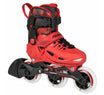







A speed skate should fit tightly so that every push is transferred to the frame without play. That is why a new boot often presses on the ankle, heel or ball of the foot, especially at the beginning. Many speed skates have a heat-mouldable shell or a heat-mouldable liner that can be adapted to the foot by heating. In this guide you will find out when heat moulding is worthwhile, how it generally works and what you should look out for.
What does heat moulding mean?
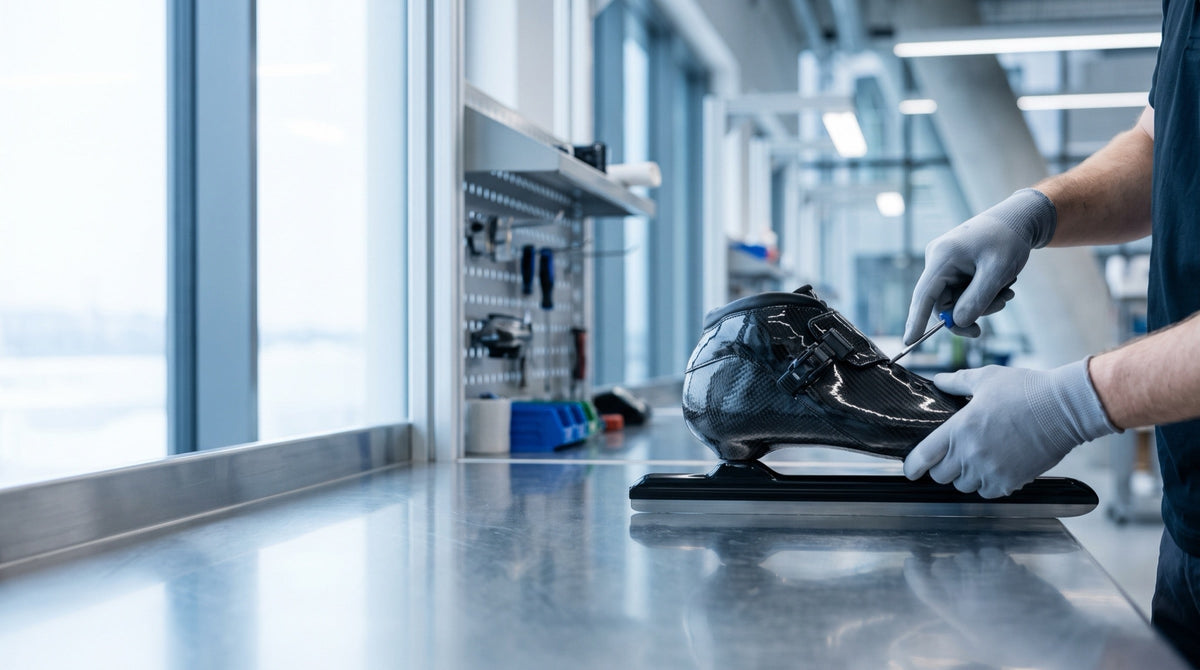
In heat moulding (also called thermoforming), the boot is heated until the material becomes pliable. It is then closed on the foot and cools down in this shape. This allows the boot to adapt in places where the foot differs from the standard shape – for example a pronounced ankle bone or a wider forefoot.
Exactly what can be moulded differs from model to model. Some examples from the product descriptions in our range:
- Bont JET Boot only: shell made of carbon and fibreglass, memory foam liner, the boot is heat-mouldable.
- Bont Semi Race Boot only: according to the text extremely heat-mouldable, as are the tongue and the footbed.
- Rollerblade Powerblade PRO 125: full carbon boot that can be heat moulded.
- K2 REDLINE: here the microfibre liner is heat-mouldable and, according to the description, can be adapted to sensitive ankles several times.
- Powerslide Vi Pro Carbon II: mouldable liner made of 3D foam.
So check beforehand whether the shell, the liner or both are mouldable on your model. This determines what an adjustment can achieve.
When is heat moulding worthwhile?
Moulding makes sense above all if the boot fits in length but presses in individual places. Typical cases:
- pressure on the ankle bones, on the inside or outside
- pressure on the ball of the foot or the base of the toes with a slightly wider forefoot
- a heel that does not sit properly in the heel cup
- a new boot that still feels hard and uncomfortable even after a few short sessions
However, heat moulding does not replace the right size. If the boot is clearly too long or too short, heat cannot compensate for this. You can read how to measure your feet correctly and find the right size in the guide Measuring your inline skate size correctly.
How heat moulding generally works
The exact procedure depends on the manufacturer. Temperature, duration and method of heating vary depending on the material and are given in the manufacturer's instructions for your model. In general, however, the following sequence applies:
- Prepare: sort out the frame, wheels and, if applicable, the insole. Put on the socks you will later wear when skating. If you skate with Ankle Booties, wear them during moulding too.
- Heat: the boot is heated according to the manufacturer's instructions until the material becomes pliable.
- Put on and close: the warm boot is put on, the heel is pushed properly to the back, then the boot is closed with the laces, buckles or straps – firmly, but without force.
- Let it cool in skating position: stand with slightly bent knees, as when skating, and move as little as possible until the boot has cooled down.
- Check: only after it has cooled down completely will you see whether the pressure points have disappeared. If a spot remains, many models can be reworked in a targeted way.
What you should look out for
- Follow the manufacturer's instructions: too much or uneven heat can damage the shell, bonded joints or padding. Never go by feel.
- Not every component is mouldable: if only the liner gives way, hard spots on the shell cannot be removed this way.
- Be patient after moulding: only skate once the boot has cooled down completely, and start with short sessions.
- If in doubt, have it fitted by a professional: especially with expensive carbon boots, it pays not to try the adjustment on your own.
Breaking in is still important
Even a heat-moulded boot needs a few sessions until it has fully adapted to your foot. Increase the distance gradually. Thin functional socks and neoprene protection such as the Ankle Booties reduce friction during this phase. You can read which thickness suits your boot in the guide Ankle Booties 1, 2 or 3 mm?
When heat moulding is not enough
Some feet do not fit into any off-the-shelf boot despite adjustment, for example with a very narrow heel, feet of clearly different sizes or misalignments. In that case a made-to-measure boot can be the solution. We explain the path from footprint to finished boot in the article Custom-Made Boots: made-to-measure boots. You will find an overview of current models in our Speed skates category.
Advice in our shop
Would you like to know whether your boot can be moulded or whether a different size is the better solution? We will be happy to advise you by phone on +49 (0) 77 20 / 34 70 6, via the contact form or in person in our shop in Villingen-Schwenningen.